
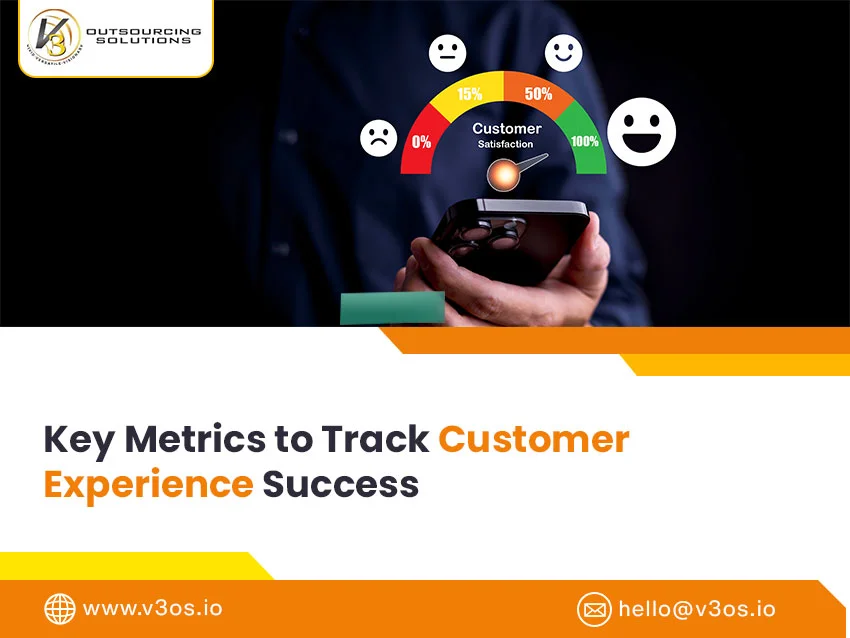
Customer experience is the last word! To thrive in 2025, customer experience is a business imperative. With customer expectations continuing to soar high, providing outstanding experience has become more and more daunting. Nowadays, organizations are not only evaluated by the quality of their products but also by how well they match up to customer requirements. To cater to these needs, companies are heavily investing in tools and a human-cantered approach. Emotional intelligence is coming to the forefront, as companies ensure that they are providing a more authentic experience.
Frankly put, customer experience (CX) is about the overall impression that a customer has of an enterprise due to all his/her interactions with it. CX denotes how a company interacts with customers at all touchpoints during their sojourn, influencing the brand and audience relationship.
Here in this blog, let us discuss the strategies that characterize the customer experience metrics for 2025 and explore different measurement methods in detail.
CSAT is the most widely accepted measure of measuring customer experience. It measures how content customers are with certain products or services. Customers are rated their satisfaction on a scale from 1-10 after the purchase or interaction.
NPS is a good measure of customer loyalty. In this, a customer is questioned regarding the likelihood of them recommending your service or product to others. Responses are being gathered, and on the basis of that, customers are classified as Promoters, Passives & Detractors.
FCR is all about quantifying the percentage of customer problems resolved within their initial contact with support. Effective problem-solving is indicated by high FCR rates, which in turn increases customer satisfaction. The key benefits of FCR are customer satisfaction improvement, increased loyalty, and lowered operating expenses.
Customer Retention Rate, more popularly referred to as CRR, measures the percentage of customers that go the extra mile interacting with your brand within a given time. Holding on to the current customers is less expensive than snatching new ones.
Average Resolution Time or ART calculates how long it takes to resolve customer issues. The sooner, the better, resulting in more satisfaction and then indicating the effectiveness of your support process. The major highlights of ART are customer satisfaction, operational efficiency and engagement, increasing in that order. Specifically, ART is computed by dividing the total time it takes to resolve all the queries with the total number of queries.
LTV measures the amount of revenue that a customer will generate during the course of their relationship with your brand. It is all about the long-term effect of customer relationships on financials.
When customer experience in5 is being measured, it is more of a requirement. Embracing the right metrics like NPS, CSAT & CES, companies usually turn into customer engagement from problem solving. The ultimate aim is to provide a seamless, fluid experience that meets up with the expectations of the customers. Therefore, utilizing such customer experience measurement strategies allows companies to attain high CX metrics in 2025 & more.

 Reasons why Your Business Needs Social Media Outsourcing For Business Repute
 Why Data Entry Outsourcing Is a Smart Choice for Insurance Companies
 Best BPO in India for Smarter Insurance Claims Handling
 Handpicked Five Telemarketing Services in India That Can Grow Your Business
 How BPO Outsourcing Services in India Accelerate Sales Growth and Customer Acquisition
 Best Telemarketing Services in UK for Lead Generation in 2027
 How Voice Technology Is Transforming Customer Service Outsourcing in the UK
 Why BPO in India is a Preferred Choice for Global Businesses ?
 Unlock Business Growth with V3OS, the Best BPO Company in India
 How Invoice Data Entry Outsourcing Can Streamline Logistics Operations